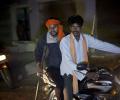
'The cow is sacred to many of us, but these killings are definitely not part of the Hinduism we know and practise,' says Jyoti Punwani.

'A bit of marketing, a bit of positioning, and a lot of strategic thinking is required, and all this should be in aid of India's strategic intent: Becoming the third pole in a global G3 and aiming for Numero Uno,' says Rajeev Srinivasan.

Volkswagen is under huge pressure to act, with its shares down more than a third in value since the crisis broke, and the bad news still coming.
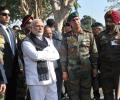
'If India employed a strategy of a 'thousand cuts', Pakistan will wither away.'

'Pakistan's military leaders have to accept that the policy of proxy wars has damaged Pakistan more than it has damaged the enemy,' says former R&AW chief Vikram Sood.

Here is the full text of the joint statement issued by India and the US.

'If Indian armed forces entered Pakistan and succeeded in inflicting major damage on the Pakistani army and occupied territory in the Pakistani heartland, there is reason to think the Pakistani military would use some nuclear weapons against the incoming Indian forces to compel India to stop.'

'Their failure to take Siachen is an embarrassment to the Pakistan army -- and let them live with it. Our army's shoulders are broad enough to endure the challenge.'

'The situation is in real danger of swinging back to the fearful days of the 1990s, primarily for want of a well thought out action plan in New Delhi.'

'The Senators were playing safe, not angering either the pro-India lobby or the pro-Pakistan lobby, but perhaps more importantly, the military-industrial complex -- the most powerful lobby of all -- which the majority of Senators are beholden to in terms of largesse to their campaign coffers.'

Any attempt to defang Islamic State must first cut off its main sources of funding, especially its revenue from oil sales, extortion and crime, ransom payments, and support from foreign donors. This will also be need to be backed up by efficient forces on the ground.
'The attack on the Pathankot base constituted an act of war. Yet Modi's only public comment up until now on that attack has been to blame it on "enemies of humanity".' 'Modi came to power talking tough about Pakistan. But in office, he has pursued a Pakistan policy that has lost both direction and purpose,' argues Brahma Chellaney.

'We cannot forget that Pakistan is a criminal State, it is a rogue State and yet we want oil pipelines to go through their State, we want to have people-to-people contact, want to increase trade with them.' 'When Modi was prime minister-elect, he said there can be no dialogue in the face of bombs and bullets. After becoming prime minister, he is saying talks will continue. Was he then misleading the public then or is he misleading the public now?' 'Nobody goes around abusing China. The fact is China is a great power. I do not think India is a great power. People spit on our face and we still go grovelling before them.'

'The parallels between 1914 and 2014 are striking. The crumbling of American and Russian hegemony, the rise of powerful terrorist groups, ferment in the Middle East and the rise of China... These closely mirror the world of 1914,' says Colonel Anil A Athale (retd).

'It was a mission undertaken in darkness in every sense -- literally, because Afghanistan had no electricity at that time; and, metaphorically because Delhi historically dealt only with the Pashtuns of Afghanistan and the foreign ministry's vast archives had nothing to offer on the culture and politics of the northern tribes in the Hindu Kush.'
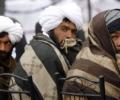
The two countries that will be most affected by the internal developments in Pakistan are India and the United States, says Bob Blackwill. Aziz Haniffa reports

The developments in Af-Pak region, particularly the fall out of Pak political paralysis, would make President Xi Jinping's task a little more complicated, says Colonel R Hariharan.
.jpg)
The Indian Army must be given a free hand to retaliate punitively at one or more places of its choosing on the LoC. The aim should be to cause maximum damage to the forward posts of the Pakistan army, particularly those through which recent attacks have been launched, thereby raising the cost for the army, says Gurmeet Kanwal.
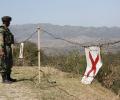
'The response to terror is not always reciprocal terror, nor is launching a conventional response the best response.' 'The best response is to make the sponsor pay a price he cannot afford,' says former RA&W chief Vikram Sood.

'We're going to see a defence relationship that really takes off -- now that India is a major defence partner of the US, the sky is the limit for arms sales.' 'The economic partnership will lag behind the security relationship, but the meeting and joint statement give cause to believe that it will progress more robustly than many of us would have expected.'

'Soon enough, we were out shouted. The journalist had a multiple agenda -- he berated the Government, the bureaucracy in general and the UPSC system that selected them.'
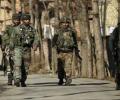
'I am aware that mention of a threat to Gulmarg emanating from my perception may send negative signals to tourists but there are realities which need to be taken stock of.' 'Gulmarg is not far from Srinagar and is what the army calls in its parlance "a big name place." Such places draw attention much faster when negative incidents take place and give value of eyeball attraction.'

'We don't have to be the world's policeman. We don't have to impose our values. But we need to lead and when we pull back as we've done, you begin to see exactly what happens -- the voids are filled by threats of terror that countries have to suffer with, including India.'
After weighing all the costs and benefits, the next administration is likely to reduce and restructure assistance to Pakistan but not to end it altogether, says Daniel S Markey.

The following is the full text of US President Donald Trump's first address to a joint session of the Congress on February 28, as prepared for delivery and released by the White House press office.

'Whether it's investments in Kashmir, building naval facilities, or selling top-of-the-range military equipment, Pakistan could well benefit more under Xi's watch.' 'Do Chinese concerns about the 'Islamisation' of Pakistan give it pause about how quickly to move forward with security and economic projects? At the moment the indication is quite the opposite: China is doubling down on its support to Pakistan, partly because of its fears about where the country is headed.'
